

More Than a Dean:The Legacy of Bro. Dr. Lawrence E. Carter Sr.
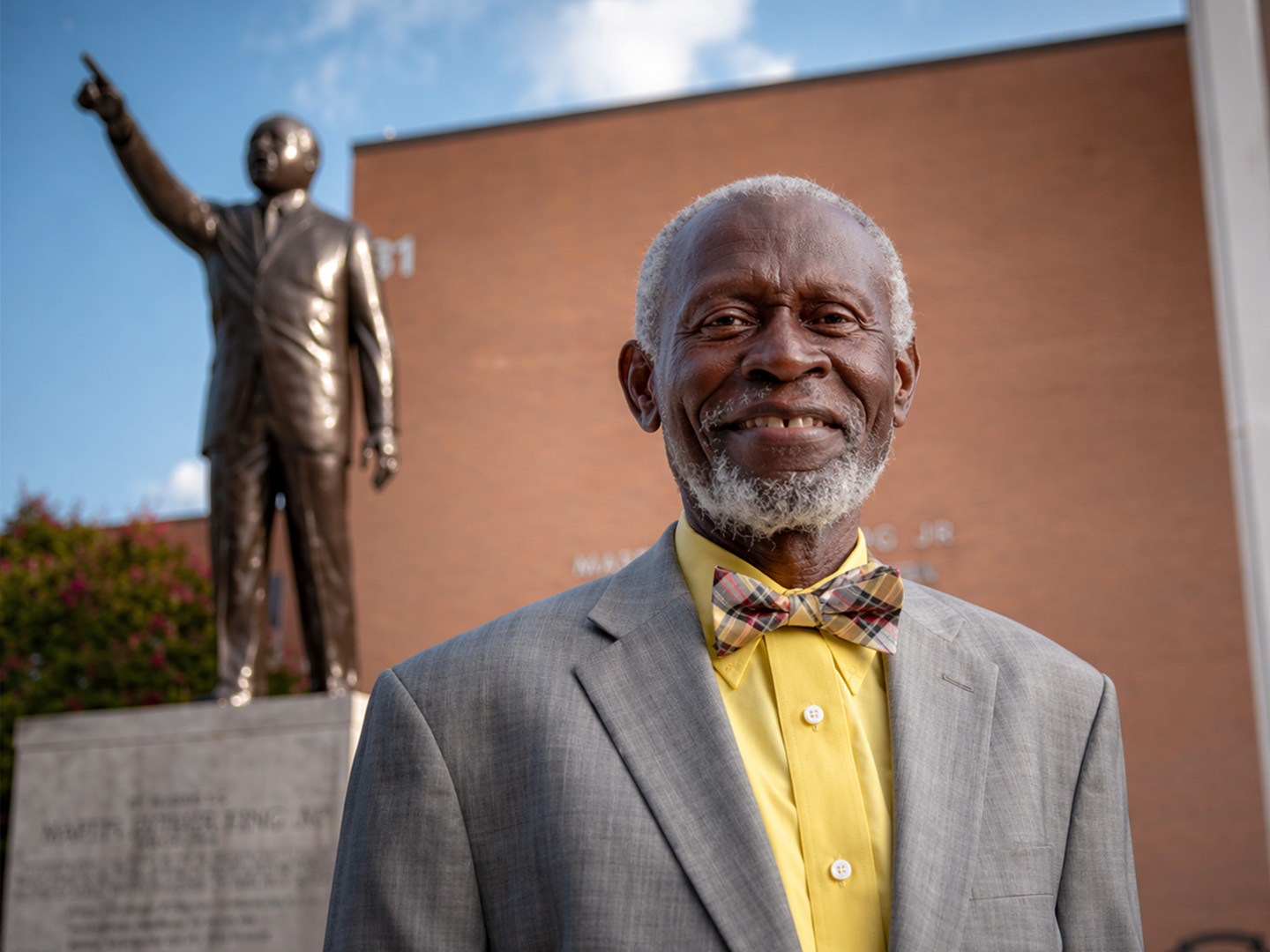
On Sunday, April 19, 2026, history did not simply pause—it listened—as Bro. Dr. Lawrence Edward Carter Sr. delivered his final sermon after forty-seven years as Dean of the Martin Luther King Jr. International Chapel at Morehouse College. In that moment, what echoed through the sanctuary was not just a closing message, but the culmination of a life that had become, in the words spoken in his honor, “the blueprint” .
To understand the weight of that moment, one must trace it back to a single encounter. As a young man, Carter heard Martin Luther King Jr. preach—and something shifted. What began as inspiration became assignment. Years later, Carter would reflect on his life as almost “choreographed,” guided by divine alignment rather than coincidence . That belief would define everything that followed.
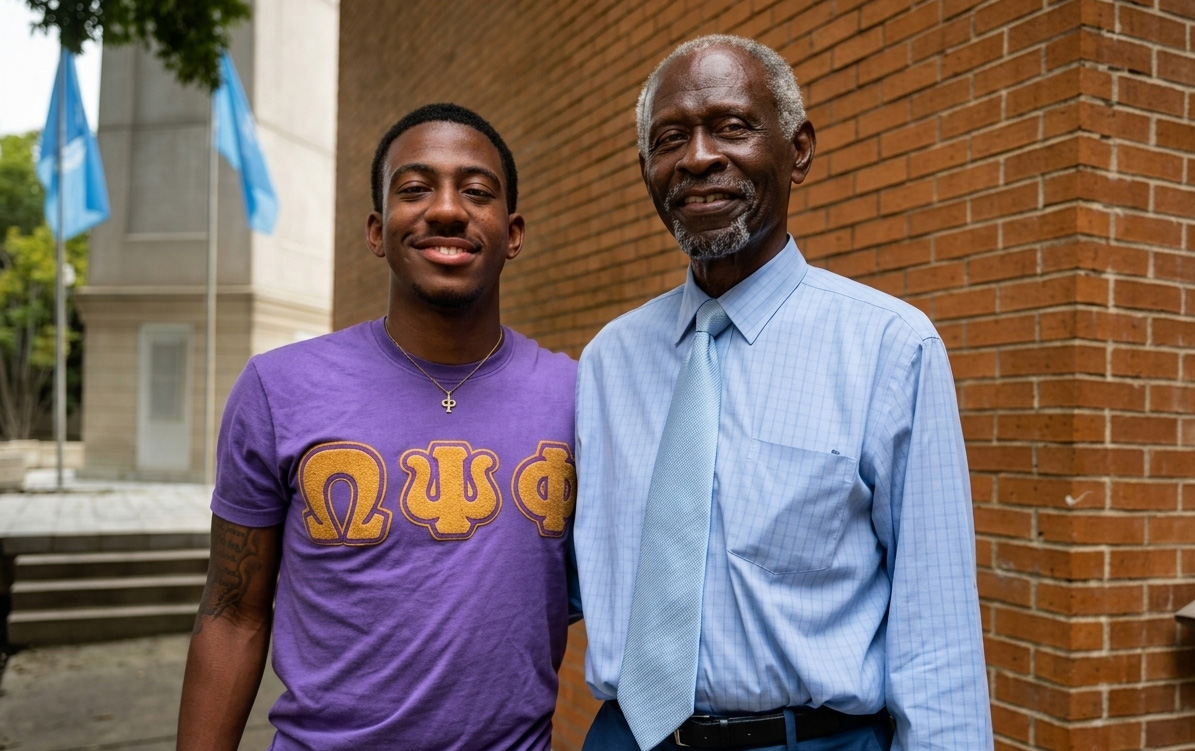
His journey into Omega Psi Phi Fraternity, Inc. carried that same sense of purpose. Initiated through the Eta Phi Chapter in Boston, Massachusetts in 1974, Bro. Carter was influenced by Bro. Richard Taylor, the first Rhodes Scholar in Boston University’s history. Taylor’s example of scholarship and global excellence affirmed what Carter already believed: that intellect, discipline, and service were inseparable. Becoming an Omega Man was not a milestone—it was a natural extension of who he was becoming.
When Carter arrived at Morehouse in 1979 as the founding Dean of the King Chapel, he stepped into an opportunity he had once prayed for on the night of Dr. King’s assassination—to do something meaningful for the legacy he so deeply admired. What he built was not merely an institution, but an ecosystem of thought, faith, and leadership. The Chapel became a global center where ethical leadership, spiritual formation, and social justice converged, shaping the identity of generations of Morehouse Men .
Those who passed through his guidance often describe him not simply as a dean, but as a “spiritual father”—a steady presence whose influence extended far beyond Sunday sermons . His leadership was rarely loud, but always lasting. It showed up in the quiet consistency of mentorship, in the discipline he demanded, and in the vision he refused to dilute.
And that vision produced leaders.
View this post on Instagram
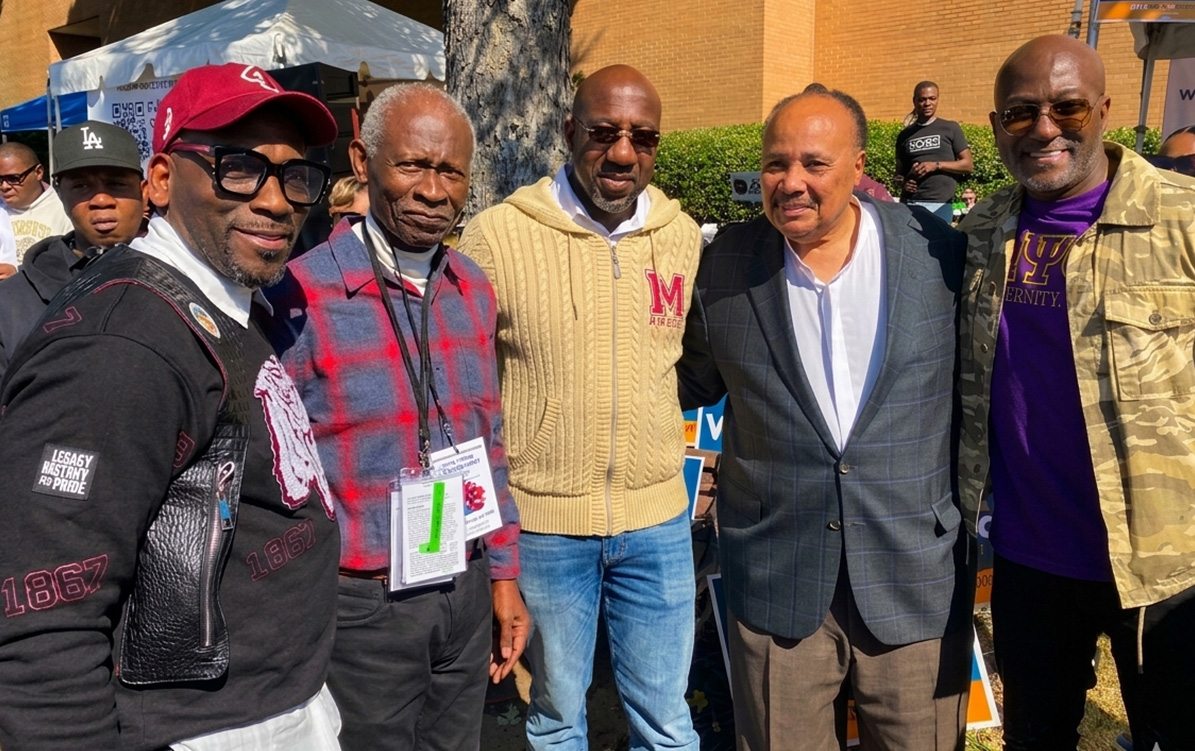
Among those shaped under his watch are figures who now stand in pulpits, public squares, and global platforms—men like U.S. Senator Raphael Warnock, Pastor Jamal Bryant, Bro. E Dewey Smith (@officialedeweysmith), and Bro. Kevin R. Johnson (@drkrj). Each, in their own way, reflects the imprint of a man who believed leadership was not taught—it was cultivated.
Carter’s philosophy refused to be confined. A self-described “moral cosmopolitan,” he drew from the teachings of Christ while engaging the principles of Mahatma Gandhi and Daisaku Ikeda, advancing a vision of peace rooted in what he described as “the wholeness of right relationships.” It was a framework that challenged division and elevated dialogue—not as compromise, but as conviction.
Through the founding of the Gandhi King Ikeda Institute for Global Ethics and Reconciliation and the creation of the International Hall of Honor, Carter ensured that these ideas would not remain abstract. They would live, be seen, and be studied. More than 200 portraits of global leaders now stand as visual testimony to a life committed to connecting movements, cultures, and moral traditions.
Yet, for all the global reach—38 countries visited, more than 1,000 lectures delivered, and countless honors received, including the Presidential Lifetime Achievement Award—Carter’s work was never about recognition. It was about responsibility. As reflected in his own journey, he believed the calling was always greater than the individual.
At the center of that calling stood his wife, Marva Griffin Carter. Their union, formed during his years in Boston and sustained since 1979, has been a quiet but powerful foundation beneath his public life. Together, they embodied the same principles he taught—faith, discipline, and shared purpose—demonstrating that legacy is not only built in institutions, but in relationships.
And so, as the final sermon came to a close, the question was never whether his work had ended—but where it would continue.
Because the measure of Bro. Carter’s life cannot be confined to a title, a building, or even a tenure. It lives in the men he mentored, the ideas he advanced, and the moral clarity he insisted upon.
Every great builder needs a blueprint.
For generations of leaders shaped at Morehouse and beyond, Bro. Carter became exactly that.